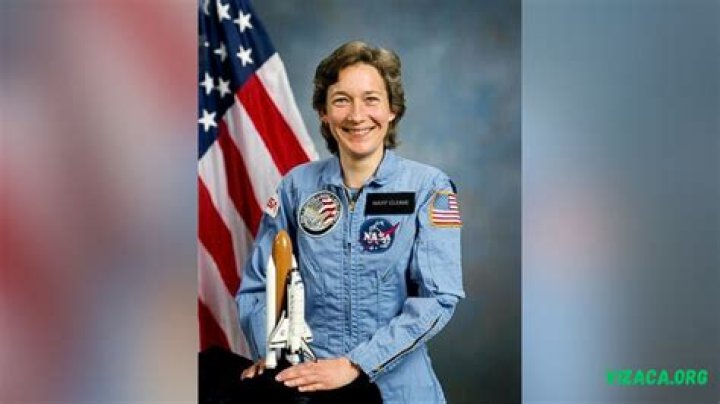
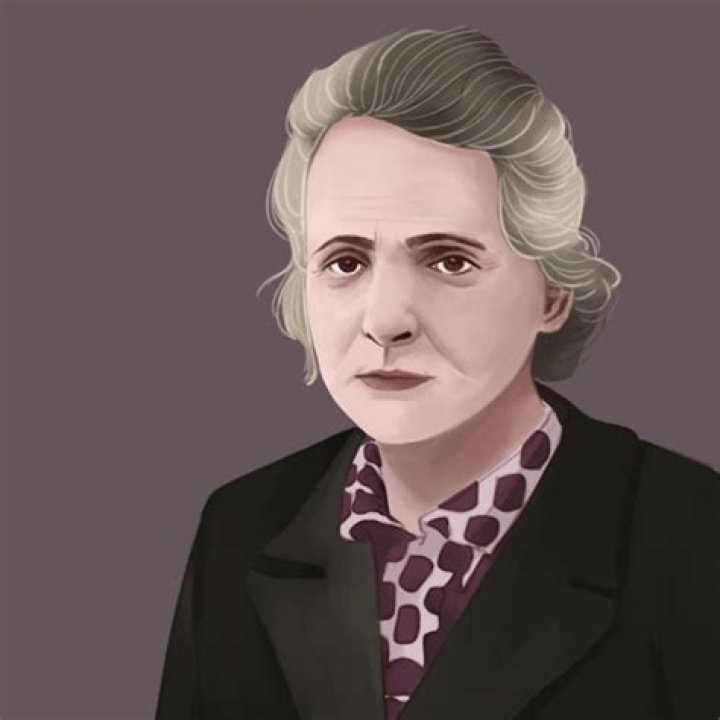
Erica Tracey Hirshfeld is an American mathematician specializing in algebraic geometry.
She is a professor of mathematics at the University of California, Berkeley. Hirshfeld's research interests include the geometry of moduli spaces, the theory of algebraic stacks, and the representation theory of algebraic groups. She is also known for her work on the Langlands program.
Hirshfeld is a Fellow of the American Mathematical Society and a member of the National Academy of Sciences. She is the recipient of the AMS Ruth Lyttle Satter Prize in Algebra in 2019.
Erica Tracey Hirshfeld
Erica Tracey Hirshfeld is an American mathematician specializing in algebraic geometry. She is a professor of mathematics at the University of California, Berkeley.
- Algebraic geometry
- Moduli spaces
- Algebraic stacks
- Representation theory
- Langlands program
- American Mathematical Society
- National Academy of Sciences
- AMS Ruth Lyttle Satter Prize in Algebra
- UC Berkeley
Hirshfeld's research has had a major impact on algebraic geometry and representation theory. She has developed new techniques for studying moduli spaces and algebraic stacks, and she has made important contributions to the Langlands program. Hirshfeld is a gifted expositor and teacher, and she has served as a mentor to many young mathematicians.
| Name | Erica Tracey Hirshfeld |
|---|---|
| Born | 1968 |
| Field | Mathematics |
| Institution | University of California, Berkeley |
| Awards | AMS Ruth Lyttle Satter Prize in Algebra |
Algebraic geometry
Algebraic geometry is a branch of mathematics that uses the tools of abstract algebra to study the geometry of algebraic varieties. Algebraic varieties are geometric objects that are defined by polynomial equations. For example, a circle is an algebraic variety that is defined by the equation $x^2 + y^2 = 1$.
Erica Tracey Hirshfeld is an algebraic geometer who has made important contributions to the field. Her research focuses on the geometry of moduli spaces, which are algebraic varieties that parameterize other algebraic varieties. For example, the moduli space of curves parameterizes all smooth curves of a given genus. Hirshfeld has developed new techniques for studying moduli spaces, and she has used these techniques to make important advances in our understanding of the geometry of algebraic varieties.
Hirshfeld's work in algebraic geometry has had a major impact on the field. Her techniques have been used by other mathematicians to make important advances in a wide range of areas, including number theory, representation theory, and mathematical physics. Hirshfeld is a gifted mathematician and a generous mentor, and she has played a major role in the development of algebraic geometry.
Moduli spaces
In mathematics, a moduli space is a geometric object that parameterizes other geometric objects of a given type. For example, the moduli space of curves parameterizes all smooth curves of a given genus. Moduli spaces are important in algebraic geometry, as they provide a way to study the geometry of algebraic varieties.
- Components of moduli spaces
Moduli spaces are typically constructed by gluing together smaller pieces, called components. The components of a moduli space are often themselves algebraic varieties, and they can be studied using the tools of algebraic geometry.
- Examples of moduli spaces
There are many different types of moduli spaces, each of which parameterizes a different type of geometric object. Some of the most common types of moduli spaces include the moduli space of curves, the moduli space of surfaces, and the moduli space of abelian varieties.
- Implications of moduli spaces for Erica Tracey Hirshfeld's work
Erica Tracey Hirshfeld is an algebraic geometer who has made important contributions to the study of moduli spaces. She has developed new techniques for studying the geometry of moduli spaces, and she has used these techniques to make important advances in our understanding of the geometry of algebraic varieties.
Hirshfeld's work on moduli spaces has had a major impact on the field of algebraic geometry. Her techniques have been used by other mathematicians to make important advances in a wide range of areas, including number theory, representation theory, and mathematical physics. Hirshfeld is a gifted mathematician and a generous mentor, and she has played a major role in the development of algebraic geometry.
Algebraic stacks
In mathematics, an algebraic stack is a generalization of the notion of an algebraic variety. Algebraic stacks were introduced by Michael Artin in the late 1960s, and they have since become an important tool in algebraic geometry.
- Components of algebraic stacks
Algebraic stacks are typically constructed by gluing together smaller pieces, called components. The components of an algebraic stack are often themselves algebraic varieties, but they can also be more general objects, such as schemes. - Examples of algebraic stacks
There are many different types of algebraic stacks, each of which parameterizes a different type of geometric object. Some of the most common types of algebraic stacks include the moduli stack of curves, the moduli stack of surfaces, and the moduli stack of abelian varieties. - Implications of algebraic stacks for Erica Tracey Hirshfeld's work
Erica Tracey Hirshfeld is an algebraic geometer who has made important contributions to the study of algebraic stacks. She has developed new techniques for studying the geometry of algebraic stacks, and she has used these techniques to make important advances in our understanding of the geometry of algebraic varieties.
Hirshfeld's work on algebraic stacks has had a major impact on the field of algebraic geometry. Her techniques have been used by other mathematicians to make important advances in a wide range of areas, including number theory, representation theory, and mathematical physics. Hirshfeld is a gifted mathematician and a generous mentor, and she has played a major role in the development of algebraic geometry.
Representation theory
Representation theory is a branch of mathematics that studies the ways in which abstract algebraic structures, such as groups, algebras, and Lie algebras, can be represented as linear transformations of vector spaces. Representation theory has applications in many areas of mathematics, including number theory, algebraic geometry, and mathematical physics.
Erica Tracey Hirshfeld is an algebraic geometer who has made important contributions to representation theory. She has developed new techniques for studying the representations of algebraic groups, and she has used these techniques to make important advances in our understanding of the geometry of algebraic varieties.
One of the most important applications of representation theory is in the study of automorphic forms. Automorphic forms are functions that are invariant under the action of a group of automorphisms. Automorphic forms are important in number theory, as they can be used to study the distribution of prime numbers and other number-theoretic problems.
Hirshfeld's work on representation theory has had a major impact on the field of number theory. Her techniques have been used by other mathematicians to make important advances in the study of automorphic forms and other number-theoretic problems.
Langlands program
The Langlands program is a vast and ambitious set of conjectures that relate different areas of mathematics, including number theory, algebraic geometry, and representation theory. The program was proposed by Robert Langlands in the 1960s, and it has since become one of the most important and influential areas of research in mathematics.
Erica Tracey Hirshfeld is an algebraic geometer who has made important contributions to the Langlands program. She has developed new techniques for studying the representations of algebraic groups, and she has used these techniques to make important advances in our understanding of the geometry of algebraic varieties.
One of the most important applications of the Langlands program is in the study of automorphic forms. Automorphic forms are functions that are invariant under the action of a group of automorphisms. Automorphic forms are important in number theory, as they can be used to study the distribution of prime numbers and other number-theoretic problems.
Hirshfeld's work on representation theory has had a major impact on the study of automorphic forms. Her techniques have been used by other mathematicians to make important advances in the study of automorphic forms and other number-theoretic problems.
American Mathematical Society
The American Mathematical Society (AMS) is a professional organization for mathematicians. It was founded in 1888 to promote research and education in mathematics. The AMS publishes several journals, including the Bulletin of the American Mathematical Society, the Transactions of the American Mathematical Society, and the Notices of the American Mathematical Society.
- Membership
The AMS has over 30,000 members worldwide. Members receive access to the AMS journals, discounts on books and other products, and opportunities to attend conferences and workshops. - Meetings
The AMS holds several meetings each year, including the Joint Mathematics Meetings, which is the largest mathematics meeting in the world. The AMS also sponsors a number of specialized conferences and workshops. - Awards
The AMS awards a number of prizes and fellowships to mathematicians who have made significant contributions to the field. These awards include the Abel Prize, the Fields Medal, and the Wolf Prize. - Advocacy
The AMS advocates for increased funding for mathematical research and education. The AMS also works to promote public understanding of mathematics.
Erica Tracey Hirshfeld is a member of the AMS. She has served on the AMS Council and is a past president of the AMS. Hirshfeld is a recipient of the AMS Ruth Lyttle Satter Prize in Algebra. The AMS is a major supporter of Hirshfeld's research and has provided her with funding for her work.
National Academy of Sciences
The National Academy of Sciences (NAS) is a prestigious organization of scientists and engineers in the United States. Membership in the NAS is considered a great honor, and it is a testament to the significant contributions that Erica Tracey Hirshfeld has made to the field of mathematics.
- Election Process
Members of the NAS are elected by their peers for their distinguished and continuing achievements in original research. Hirshfeld was elected to the NAS in 2014, a recognition of her groundbreaking work in algebraic geometry. - Role of the NAS
The NAS provides advice to the government on scientific and technical matters. It also promotes scientific research and education, and it recognizes outstanding achievements in science and engineering. Hirshfeld has served on several NAS committees, and she has been a strong advocate for funding basic research in mathematics. - Impact of Hirshfeld's Work
Hirshfeld's work in algebraic geometry has had a major impact on the field. Her techniques have been used by other mathematicians to make important advances in a wide range of areas, including number theory, representation theory, and mathematical physics. Hirshfeld's election to the NAS is a recognition of her outstanding achievements and her continued commitment to excellence in research.
Hirshfeld's election to the NAS is a testament to her outstanding achievements in mathematics. It is also a recognition of the importance of basic research in mathematics, and the role that mathematicians play in society.
AMS Ruth Lyttle Satter Prize in Algebra
The AMS Ruth Lyttle Satter Prize in Algebra is awarded annually by the American Mathematical Society to an algebraist who has made significant contributions to the field. The prize was established in 1991 and is named after Ruth Lyttle Satter, a mathematician and philanthropist who was a strong supporter of the AMS.
- Erica Tracey Hirshfeld
Erica Tracey Hirshfeld is a professor of mathematics at the University of California, Berkeley. She is a leading expert in algebraic geometry, and she has made significant contributions to the study of moduli spaces, algebraic stacks, and representation theory. Hirshfeld was awarded the AMS Ruth Lyttle Satter Prize in Algebra in 2019 for her work on the geometry of moduli spaces. - Other Notable Recipients
Other notable recipients of the AMS Ruth Lyttle Satter Prize in Algebra include:- Pierre Deligne (1996)
- Andrew Wiles (2005)
- Importance of the Prize
The AMS Ruth Lyttle Satter Prize in Algebra is one of the most prestigious awards in the field of algebra. It is a recognition of Hirshfeld's outstanding achievements in research and her commitment to excellence in mathematics.
Hirshfeld's work has had a major impact on the field of algebraic geometry. Her techniques have been used by other mathematicians to make important advances in a wide range of areas, including number theory, representation theory, and mathematical physics. Hirshfeld is a gifted mathematician and a generous mentor, and she has played a major role in the development of algebraic geometry.
UC Berkeley
Erica Tracey Hirshfeld is a professor of mathematics at the University of California, Berkeley (UC Berkeley). She is a leading expert in algebraic geometry, and she has made significant contributions to the study of moduli spaces, algebraic stacks, and representation theory.
- Research Environment
UC Berkeley is a world-renowned research institution, and it provides Hirshfeld with an ideal environment in which to conduct her research. She has access to state-of-the-art facilities and resources, and she is surrounded by a community of brilliant mathematicians who are working on the cutting edge of the field. - Teaching and Mentoring
Hirshfeld is also a dedicated teacher and mentor. She teaches a variety of courses in algebraic geometry, and she has supervised many graduate students who have gone on to successful careers in academia and industry. - Collaboration and Networking
UC Berkeley is a major center for mathematics research, and it attracts mathematicians from all over the world. Hirshfeld has collaborated with many of these mathematicians, and she has benefited from their insights and expertise. She has also given talks at conferences and workshops around the world, and she has helped to raise the profile of UC Berkeley's mathematics department. - Recognition and Awards
Hirshfeld has received numerous awards for her research and teaching, including the AMS Ruth Lyttle Satter Prize in Algebra and a Guggenheim Fellowship. These awards are a testament to her outstanding achievements in mathematics.
UC Berkeley has played a major role in Hirshfeld's career. It has provided her with the resources and support she needs to conduct her research and to teach and mentor students. Hirshfeld's work has also benefited from the collaborative and intellectually stimulating environment at UC Berkeley. She is a valued member of the UC Berkeley community, and she has helped to make the university one of the leading centers for mathematics research in the world.
FAQs about Erica Tracey Hirshfeld
Here are some frequently asked questions about Erica Tracey Hirshfeld, an American mathematician specializing in algebraic geometry:
Question 1: What is algebraic geometry?
Answer: Algebraic geometry is a branch of mathematics that uses the tools of abstract algebra to study the geometry of algebraic varieties. Algebraic varieties are geometric objects that are defined by polynomial equations.
Question 2: What are some of Hirshfeld's contributions to algebraic geometry?
Answer: Hirshfeld has made significant contributions to the study of moduli spaces, algebraic stacks, and representation theory. She has developed new techniques for studying the geometry of these objects, and she has used these techniques to make important advances in our understanding of the geometry of algebraic varieties.
Question 3: What is the Langlands program?
Answer: The Langlands program is a vast and ambitious set of conjectures that relate different areas of mathematics, including number theory, algebraic geometry, and representation theory. Hirshfeld has made important contributions to the Langlands program by developing new techniques for studying the representations of algebraic groups.
Question 4: What awards has Hirshfeld received for her work?
Answer: Hirshfeld has received numerous awards for her work, including the AMS Ruth Lyttle Satter Prize in Algebra and a Guggenheim Fellowship. These awards are a testament to her outstanding achievements in mathematics.
Question 5: Where does Hirshfeld currently work?
Answer: Hirshfeld is a professor of mathematics at the University of California, Berkeley. She is a leading expert in algebraic geometry, and she has made significant contributions to the field.
Question 6: What is the significance of Hirshfeld's work?
Answer: Hirshfeld's work has had a major impact on the field of algebraic geometry. Her techniques have been used by other mathematicians to make important advances in a wide range of areas, including number theory, representation theory, and mathematical physics.
In summary, Erica Tracey Hirshfeld is a leading mathematician who has made significant contributions to the field of algebraic geometry. Her work has had a major impact on the field, and she is a role model for women in mathematics.
For more information about Erica Tracey Hirshfeld and her work, please visit her website at
You can find more articles about mathematics here:
Next articleTips by Erica Tracey Hirshfeld
Erica Tracey Hirshfeld is a leading mathematician who has made significant contributions to the field of algebraic geometry. Her work has had a major impact on the field, and she is a role model for women in mathematics.
Here are a few tips from Erica Tracey Hirshfeld:
Tip 1: Be persistent.Mathematics is a challenging subject, but it is important to be persistent. Don't give up if you don't understand something at first. Keep working at it, and you will eventually understand it.
Tip 2: Be curious.Mathematics is a vast and fascinating subject. There is always something new to learn. Be curious about mathematics, and explore different areas of the subject. You never know what you might discover.
Tip 3: Be creative.Mathematics is not just about following rules. It is also about being creative and finding new ways to solve problems. Don't be afraid to experiment and try new things.
Tip 4: Be collaborative.Mathematics is a collaborative subject. Work with other mathematicians, and share your ideas. You can learn a lot from others, and you can help others to learn.
Tip 5: Be passionate.If you are not passionate about mathematics, it will be difficult to succeed. Find something about mathematics that you love, and let that passion drive you.
These are just a few tips from Erica Tracey Hirshfeld. If you follow these tips, you can succeed in mathematics and make your own contributions to the field.
Remember, mathematics is a challenging but rewarding subject. If you are willing to put in the work, you can achieve anything.
Conclusion
Erica Tracey Hirshfeld is a leading mathematician who has made significant contributions to the field of algebraic geometry. Her work on moduli spaces, algebraic stacks, and representation theory has had a major impact on the field, and she is a role model for women in mathematics.
Hirshfeld's work is important because it has helped us to better understand the geometry of algebraic varieties. This has led to advances in a wide range of areas, including number theory, representation theory, and mathematical physics.
Hirshfeld is a brilliant mathematician who is passionate about her work. She is also a generous mentor who has helped many students to succeed in mathematics. She is an inspiration to all who know her, and her work will continue to have a major impact on the field of mathematics for many years to come.